|

Sinop travel
situated on a narrow peninsula at Turkey’s
northernmost point, Sinop is like a Black
Sea island with its good-natured people and
streets where time passes slowly.

Development of the Pontic Greek
Dialect
Will Pontic Greek continue to be spoken?
Bortone (2009) believes Pontic Greek spoken
in the Pontos in Asia Minor today will
probably disappear. The challenge is to keep
the Pontic Greek dialect alive. The more
recent work of researchers like Emeritus
Professor Peter Mackridge, Assistant
Professor Pietro Bortone, Dr Theofanis
Malkidis, Ömer Asan, Dr Anthi Revithiadou
and Dr Vassilios Spyropoulos have increased
our knowledge of the dialect.
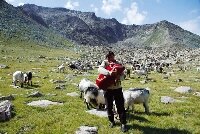
Time For to Discover the Black Sea Highlands
Discover the Black Sea
highlands in September when time is suddenly
rent by a blanket of fog or the cry of a
vulture, and make the acquaintance of nature in
its most beautiful aspect.

Formation of the First Greek Settlements in the
Pontos
According to Liddell and Scott’s An Intermediate
Greek-English Lexicon, the word Pontos stands
for the sea, especially the open sea. In time,
the word Pontos became associated with the
north-eastern portion of Asia Minor that borders
the Black Sea (see Map 1).1 The Greeks first
called the Black Sea, Aξεινος πóντος
(inhospitable, unfriendly pontos), but later it
was called Εϋξεινος πóντος (hospitable pontos)
when they became aware of its wealth in the
lands around it ...

Crypto-Christians of the Trabzon Region
of Pontos
The crypto-Christians (also called cryphi,
klosti, Stavriotes, Kromledes) were Christian
Greeks who due to the Muslim persecution against
Christians publicly declared themselves Muslims.
However, in secret, they upheld their Greek
language, customs and Christian religious
practices... | |
|
|
|
| |
|
|

Pumpkin recipes
It's the quintessential symbol of Hallowe'en, a
holiday familiar to us Turks from Hollywood films. 'Winter squash'
as it was called in the old days, it is best known in Turkish as
balkabağı, literally 'honey squash' aka pumpkin. Endemic to hot and
temperate regions, it came to Europe from the New World, and to
Turkey in the 17th century where it adapted readily to the Anatolian
climate and rapidly diversified. Well-liked, its consumption rose
exponentially until today Turkey has become its second home.
This flamboyant vegetable, which played a key role in human
nutrition in earlier centuries, is best known in Turkey as a classic
sweet served to the accompaniment of ground walnuts and clotted
cream. Other varieties of squash such as vegetable marrow and gourds
used to be cooked, especially in the past, in soups and stews or
with olive oil, as well as being used widely as a filling for savory
pastries.
ONE OF THE THREE BASIC FOODS
A long time ago pumpkin was one of the three basic foods of the
Western world, in particular of Native Americans. An important
source of nutrition for its starch, fibrous texture and abundant
vitamins, pumpkin could also be preserved without spoilage for up to
six months from the time of picking. The healthy and long-term
preservation of foodstuffs was a crucial problem in periods before
refrigeration was even heard of. Not readily perishable, pumpkin was
a favorite vegetable in many homes and was used extensively in the
past for both sweets and savories. What's more, in the days before
cooking pots existed, it could even serve as its own cooking vessel.
In traditional Argentine cuisine, for example, the inside of the
pumpkin was partially carved out and meat placed inside and then
cooked, either in the oven or over coals. It is apparent, again from
old recipes, that pumpkins used to be filled with a mixture of milk
and honey and roasted over hot coals to produce a very tasty sweet.
This method is still employed in Turkish cooking. In some villages
of Anatolia, pumpkins are filled with 'pekmez' (grape molasses),
with added pine nuts, almonds, an assortment of dried fruits, and
honey, and baked in the oven to produce a pumpkin 'dolma'.
USED LESS AND LESS?
But the use of pumpkin is gradually falling off in world cuisines
today. The main reason for this is that it's so much easier now to
distribute and supply foodstuffs. Another important factor is that
the custom of eating fruits and vegetables in season has been
abandoned, which has inevitably meant a certain distancing from a
number of foods widely consumed in the past. In the West nowadays,
pumpkins carved as jack-o-lanterns serve as decorative items either
at late-summer festivals or on holidays like Hallowe'en, where they
are associated with witches on broomsticks. In the European
countries in particular decorative pumpkins appear all over the
place at the end of November, in shops and houses and on the street.
In Turkey, pumpkin continues to be a popular and sought-after winter
dessert. And in the Mediterranean in general and in our own eastern
Mediterranean region in particular, pumpkin candy made by dipping
cubes of the orange vegetable in slaked lime is all the rage in
today's increasingly eclectic world cuisine. And this New Year's, as
in year's past, a pumpkin dessert topped with molasses or clotted
cream and dusted with cinnamon will surely take price of place on
the holiday table.
RECIPES
Pumpkin Soup
Ingredients:
250 gr pumpkin
1 onion
4 tsp butter
2 tsp flour
2 tsp cream
1/4 bunch dill
2 tsp salt
1/4 tsp ground white pepper
2 cups meat stock
Preparation:
Grate half the pumpkin and cut the other half in small cubes. Melt
the butter in a skillet and add the onion. Stir for 2-3 minutes,
then add the pumpkin. Saute all together for 4-5 minutes, then add
the flour. Mix the cold milk with the meat stock and add to the
pumpkin mixture along with the cream, salt and white pepper. Bring
to a boil and skim off the foam. Boil over high heat for 5-6
minutes. Sprinkle with dill and serve hot.
Pumpkin 'Broni'
Ingredients:
250 gr pumpkin
1 onion, finely chopped
1 long, mild green pepper (Turkish 'Çarliston'), finely chopped
2 cloves of garlic
150 gr ground beef
5 tsp yoghurt
4 tsp butter
1 tsp salt
1/4 tsp ground white pepper
1/4 tsp ground red pepper
Preparation:
Cut the pumpkin in cubes. Melt the butter in a skillet, add the
pumpkin cubes and saute. Remove when cooked and put aside. Melt more
butter in the skillet and saute the onion and garlic until they
begin to color. Add the chopped pepper and ground meat and brown
until the meat is cooked through. Add the salt and pepper and put
aside. Meanwhile, mix the yoghurt well. Melt butter in the skillet
again. Add the red pepper and mix, being careful not to burn the
butter. Remove the pumpkin to a serving platter. Pour the ground
meat mixture over it and arrange the remaining pieces of pumpkin on
top. Pour the rest of the ground meat mixture over it and top with
the yoghurt. Drizzle the yoghurt with the melted butter and red
pepper and serve.
Cold Pumpkin Cooked with Olive Oil
Ingredients:
200 gr pumpkin
1 medium onion, finely chopped
3 tsp rice, rinsed
1/2 cup olive oil
juice of half a lemon
1 tsp salt
1/4 tsp ground white pepper
1/2 bunch dill
Water as needed
Preparation:
Cut the pumpkin in slices the thickness of a finger. Heat the oil in
a skillet and saute the onions until they begin to color. Then add
the pumpkin slices and cook together for 3-4 minutes. Add the lemon,
salt and white pepper and cover with water. Bring to a boil, then
add the rice. Cook all together for 20 minutes. When almost cooked,
garnish with dill and let cool. Serve cold.
Whole Stuffed Pumpkin
Ingredients:
1 whole pumpkin (about 3.5 kg)
2 sticks of cinnamon
200 gr dried apricots
200 gr dried figs
100 gr shelled hazelnuts
100 gr white almonds
100 gr seedless raisins
100 gr green pistachios (whole)
100 gr walnut meats
seeds of one pomegranate
500 gr granulated sugar
100 gr water
Preparation:
Wash and clean the pumpkin well. Cut off the top one finger-width
below the stem to form a lid. Clean out the inside, mix all the
ingredients together and stuff them inside the pumpkin. Replace the
lid and wrap the pumpkin completely in aluminum foil and place on a
baking sheet. Pour the cold water around it. Cook for about 4-5
hours at 180-200 degrees C. When cool, sprinkle with the pomegranate
seeds and serve whole.
Pumpkin Pudding made with Molasses
Ingredients:
150 gr pumpkin, grated
100 gr 'pekmez' (Turkish grape molasses)
500 gr milk
2 sticks of cinnamon
2 cloves
2 tsp cornstarch
2 egg yolks
100 gr granulated sugar
Preparation:
Grate the pumpkin. Place in a pot with the milk and let boil. Add
the cinnamon and cloves. When cooked, add the sugar and pekmez and
boil together. Mix the cornstarch with a little water, add the egg
yolks and mix well. Add a little of the boiling milk and mix, then
slowly add the cornstarch-egg yolk mixture to the boiling milk
mixture. Bring to a boil again and remove to a serving bowl. Serve
cold.
Usefull links
Eastern Black Sea houses, Turkey
Walnut
UZUNGOL, Trabzon Turkey travel
Traditional Safranbolu houses, Safranbolu Turkey
Serander, Rural Architecture in the Eastern Black Sea
Region
Addresses & Phone numbers of Museums in Istanbul
Lake Efteni, Autumn
Black Lakes of Artvin province Turkey |
|
| |